Two bags can look identical on a shelf and behave completely differently in the rain, because the difference is in the seam. Our factory runs both processes side by side: 15 high-frequency welding stations and 25 sewing stations. Which one a bag goes through is decided by what has to stay dry, not by which machine is free.
What high-frequency welding does
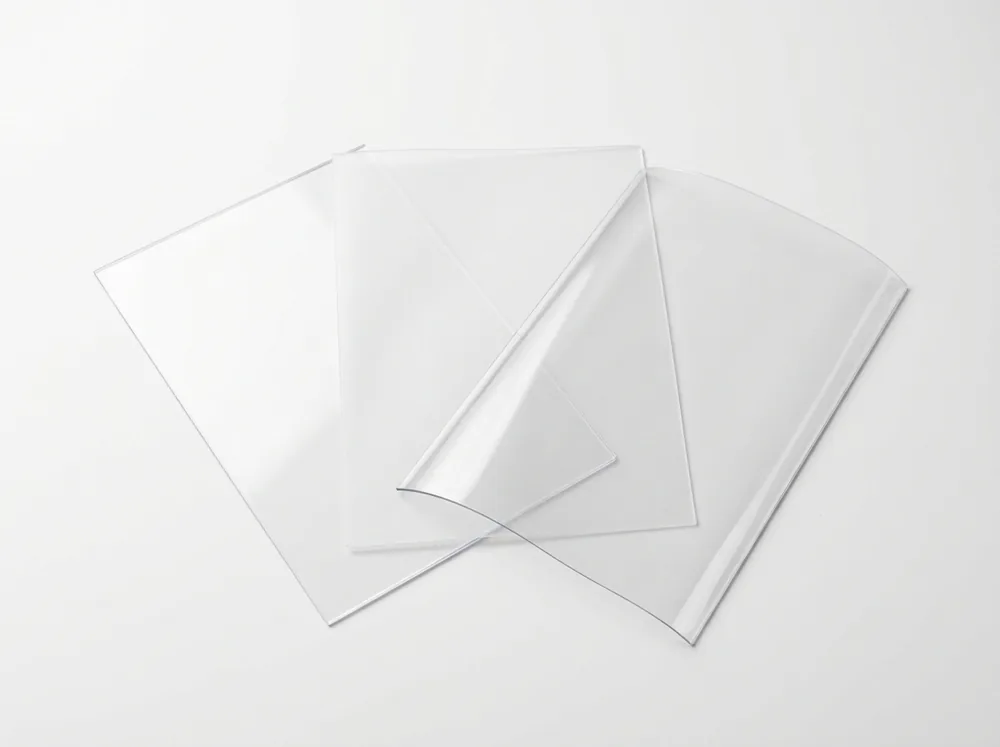
High-frequency welding passes radio-frequency energy through two layers of PVC, EVA, PU or TPU held under pressure. The energy heats the material at the interface, the two surfaces fuse, and the seam cools as a single thickness of film. There is no thread, no adhesive and no hole.
On a phone pouch that is the whole point. A stitched seam is a row of needle holes, and each hole is a path for water. Coating the thread or taping the seam afterwards reduces the leak but does not remove the holes.
What sewing does
Sewing joins panels with thread and is the right answer for woven fabric, webbing, straps, handles and any bag where strength under load matters more than sealing. It is faster on complex shapes, cheaper to set up, and it allows construction that welding cannot do: boxed corners, multiple layers of webbing, hardware that has to be anchored through fabric.
Sewing also lets a bag use a lining, padding or a non-weldable trim, which is why most duffels, backpacks and travel organisers are sewn even when their outer fabric is waterproof.
Where each one wins
- Welding: phone pouches, dry bags, waterproof cases, toiletry and cosmetic pouches, anything where the inside has to stay dry under immersion.
- Sewing: duffels, backpacks, waist packs, straps and handles, and any style built around padding, lining or hardware.
- Both: a welded body with sewn webbing, a sewn bag with a welded inner pocket, a dry bag with a sewn shoulder strap.
The hybrid build, in practice
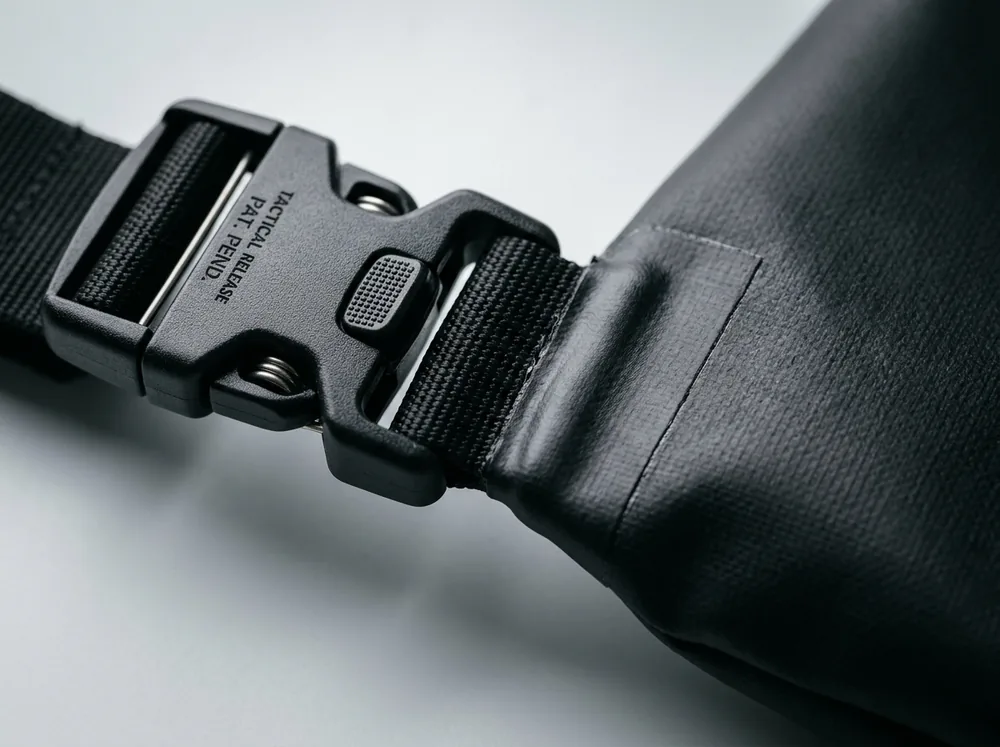
Most of the outdoor bags we produce are hybrid. The body is welded so the compartment is sealed; the carry system is sewn so it can take load. The two are joined at reinforced points rather than along a seam, and the welded area stays intact.
When a buyer asks for a sewn bag that is also waterproof, the honest answer is usually a welded inner bag inside a sewn outer, or a welded liner. A sewn seam plus a coating is water resistant, not waterproof, and it is worth being clear about that before the artwork is approved.
What it means for your specification
Welding requires a die, and the die is what drives the minimum order: the same 1,000 pieces that covers print setup also covers tooling. A welded pouch in an existing shape needs no new tooling and can be sampled in 3 to 5 days.
Sewing needs a pattern and a sample maker rather than a die, so small runs of sewn styles are easier to arrange, but the seams will not hold water.
How to spec it
Tell us what has to stay dry and what has to carry weight. If the answer is everything, the bag is welded and the strap is sewn. If only one compartment has to stay dry, a welded inner pocket is cheaper than welding the whole bag.
Both processes run under the same roof, so a hybrid build does not need a second supplier. The dry bag and outdoor range shows how the two are combined in production.